Article-Journal

Cationization to boost both type I and type II ROS generation for photodynamic therapy
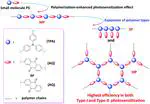
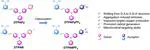
The pursuing of photosensitizers (PSs) with efficient reactive oxygen species (ROS) especially type I ROS generation in aggregate is always in high demand for photodynamic therapy (PDT) and photoimmunotherapy but remains to be a big challenge. Herein, we report a cationization molecular engineering strategy to boost both singlet oxygen and radical generation for PDT. Cationization could convert the neutral donor-acceptor (D-A) typed molecules with the dicyanoisophorone-triphenylamine core (DTPAN, DTPAPy) to their A-D-A′ typed cationic counterparts (DTPANPF6 and DTPAPyPF6). Our experiment and simulation results reveal that such cationization could enhance the aggregation-induced emission (AIE) feature, promote the intersystem crossing (ISC) processes, and increase the charge transfer and separation ability, all of which work collaboratively to promote the efficient generation of ROS especially hydroxyl and superoxide radicals in aggregates. Moreover, these cationic AIE PSs also possess specific cancer cell mitochondrial targeting capability, which could further promote the PDT efficacy both in vitro and in vivo. Therefore, we expect this delicate molecular design represents an attractive paradigm to guide the design of type I AIE PSs for the further development of PDT.
Cationization to boost both type I and type II ROS generation for photodynamic therapy
Enhanced Biological Imaging via Aggregation-Induced Emission Active Porous Organic Cages
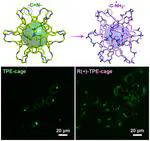
Porous organic cages (POCs) have many advantages, including superior microenvironments, good monodispersity, and shape homogeneity, excellent molecular solubility, high chemical stability, and intriguing host-guest chemistry. These properties enable POCs to overcome the limitations of extended porous networks such as metal-organic frameworks (MOFs) and covalent organic frameworks (COFs). However, the applications of POCs in bioimaging remain limited due to the problems associated with their rigid and hydrophobic structures, thus leading to strong aggregation-caused quenching (ACQ) in aqueous biological media. To address this challenge, we report the preparation of aggregation-induced emission (AIE)-active POCs capable of stimuli responsiveness for enhanced bioimaging. We rationally design a hydrophilic, structurally flexible tetraphenylethylene (TPE)-based POC that is almost entirely soluble in aqueous solutions. This POC’s conformationally flexible superstructure allows the dynamic rotation of the TPE-based phenyl rings, thus endowing impressive AIE characteristics for responses to environmental changes such as temperature and viscosity. We employ these notable features in the bioimaging of living cells and obtain good performance, demonstrating that the present AIE-active POCs are suitable candidates for further biological applications.
Enhanced Biological Imaging via Aggregation-Induced Emission Active Porous Organic Cages
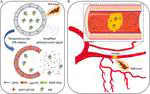
Photothermal-Activatable Liposome Carrying Tissue Plasminogen Activator for Photoacoustic Image-Guided Ischemic Stroke Treatment
Ischemic stroke is a highly prevalent cause of mortality and morbidity. The only FDA-approved treatment is thrombolysis using tissue plasminogen activator (tPA), which possesses a short effective time window. Real-time recanalization monitoring is crucial to establish successful reperfusion and serves as a strong predictor of clinical outcomes. First-line clinical imaging techniques, such as computed tomography and magnetic resonance imaging, are limited in their soft-tissue resolution, scanning speed, and accessibility. Transcranial doppler ultrasound, the current gold standard for recanalization monitoring, is a blind technique and highly operator dependent. Herein, a photothermal-activatable liposome carrying tPA for photoacoustic (PA) image-guided therapy for real-time and precise recanalization monitoring of ischemic stroke is designed. The liposome containing an organic molecule with propeller structures exhibits excellent photothermal properties and significantly amplified PA signals as compared with the widely used polymer nanoparticles. Near-infrared (NIR) laser triggers rapid release of tPA for quick blood clot lysis in vitro. Administration of the liposome in a rat photothrombotic ischemia model facilitates high-resolution PA imaging for precise real-time recanalization assessment. Precisely controlled tPA release at the ischemic region is achieved by PA image-guided NIR laser irradiation, which successfully dissolves the blood clot and restores perfusion, making this design promising for translational applications.
Photothermal-Activatable Liposome Carrying Tissue Plasminogen Activator for Photoacoustic Image-Guided Ischemic Stroke Treatment
Machine Learning-Assisted Robust Prediction of Molecular Optical Properties upon Aggregation
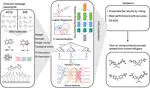
For practical applications, molecules often exist in an aggregate state. Therefore, it is of great value if one can predict the performance of molecules when forming aggregates, for example, aggregation-induced emission (AIE) or aggregation-caused quenching (ACQ). Herein, a database containing AIE/ACQ molecules reported in the literature is first established. Through training, these machine learning (ML) models can build up the structure-property relationship and thus implement fast prediction of AIE/ACQ properties. To this end, a multi-modal approach is proposed, multiple prediction methods are compared and designed, and thus an ensemble strategy is developed. First, multiple molecular descriptors are considered at the same time, major features are extracted by dimensionality reduction, and multi-modal features are synthesized. Then, several state-of-the-art methods are designed and compared to analyze the advantages of the different methods. Finally, the ensemble strategy combines the advantages of the multiple methods to obtain the final prediction result. The reliability of this approach in an unknown molecular space is further verified by three newly designed molecules. Reasonable consistency between model predictions and experimental outcomes is obtained. The result indicates that ML can be a powerful tool to predict molecular properties in the aggregated state, thus accelerating the development of solid-state optical materials.
Machine Learning-Assisted Robust Prediction of Molecular Optical Properties upon Aggregation